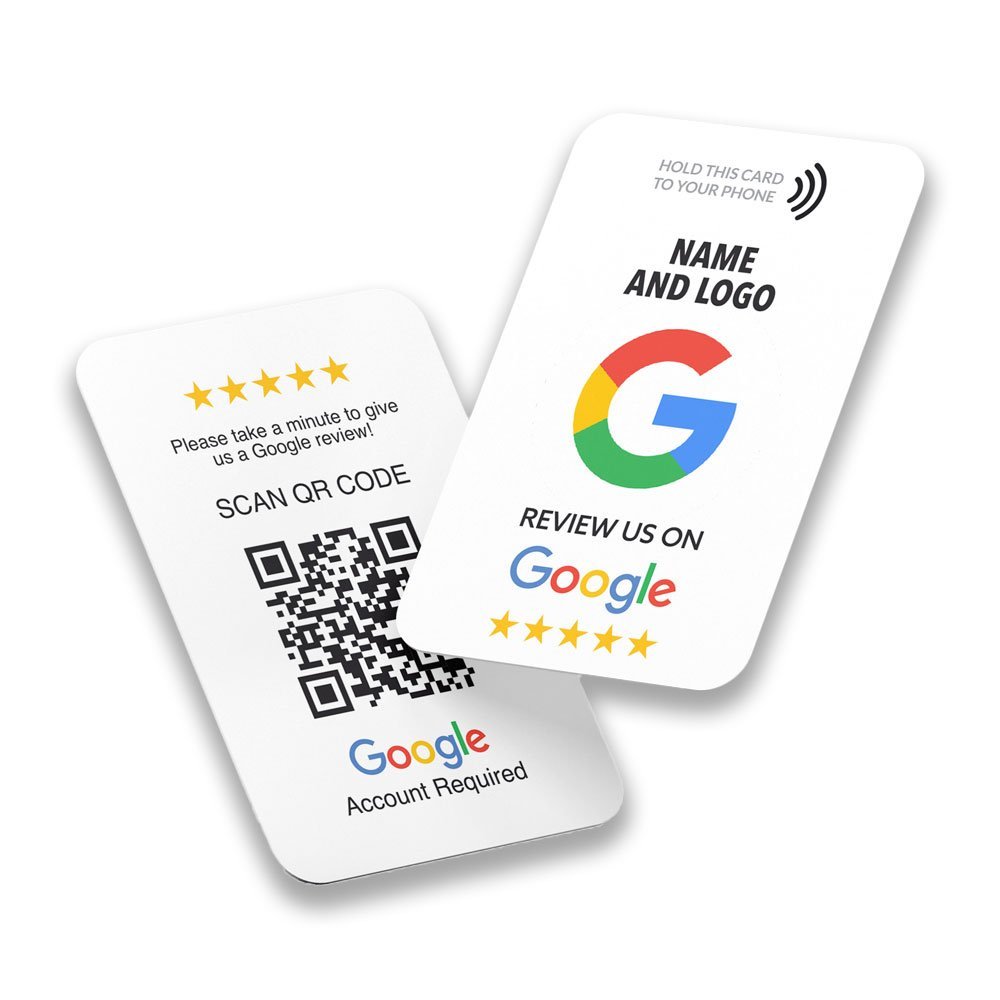
When you shop for NFC cards, tags and coins you will see names like NTAG213 and NTAG215, often with the word “genuine NXP” next to them. Sellers rarely explain what they mean. This guide does: what the numbers stand for, how much they can store, whether the difference matters for a card that opens a link, and how to check that the chip inside your card is the one you paid for.
What is an NTAG?
NTAG is a family of NFC chips made by NXP, a large semiconductor company. They follow the NFC Forum Type 2 tag standard, which is why almost every NFC phone can read them. The number at the end tells you roughly how much memory the chip has. You can read more about NFC standards at the NFC Forum.
How much memory does each have?
NXP publishes the user memory of the three common chips as:
| Chip | User memory |
|---|---|
| NTAG213 | 144 bytes |
| NTAG215 | 504 bytes |
| NTAG216 | 888 bytes |
A byte is one character of plain text, roughly. These are small numbers on purpose: NFC tags are built to hold short pieces of data, not files.
Does it matter for a link?
For most cards, barely. A card that opens a web page stores one short link. A review link or a social profile link takes a small part of even the smallest chip’s memory. So an NTAG213 and an NTAG215 will both hold a normal link comfortably, and a phone reads them in the same way.
The extra memory only matters if you want to store more on the chip itself, for example several records, a longer block of text or contact details written directly to the card. Most NFC cards avoid that, and instead keep the details on a web page so you can edit them. That is how our business cards work: the chip holds a link and the profile lives online. See what information an NFC business card can store.
Which chip do our products use?
- Review and social media cards: genuine NXP NTAG215. See the review cards and social media cards.
- Review standee: NTAG215. See the standee.
- Review coin and desk plate: NTAG213. See the coin and the plate.
All of them are programmed with one link and tested before dispatch. For how to choose between the formats, see card, coin, standee or plate.
Read range and phones
Read range depends far more on the antenna size and the phone than on the chip number. In everyday use you hold the phone within a few centimetres of the card. Thick cases, metal plates and metal surfaces can reduce or block the signal. If the tap fails, move the phone slowly, remove the case, or scan the QR code instead. See how to check whether your phone supports NFC.
Why “genuine” matters
Cheap tags sold online are sometimes unbranded clones that claim to be NTAG chips. They may have less memory than advertised, behave inconsistently, or fail on some phones. A genuine NXP chip is a reasonable baseline for a card you will put your business name on.
How to check a chip yourself
- Install a free NFC reader app on your phone from the official app store.
- Open the app and tap your card against the phone’s NFC area.
- Look for the chip type, the memory size and the manufacturer. A genuine NXP chip reports NXP as the manufacturer and a type such as NTAG213 or NTAG215 with the matching memory.
- Check the link stored on the chip matches the one you asked for.
The unique ID (UID) of an NXP chip begins with 04, which identifies NXP as the maker. Clones can copy this too, so treat it as a clue, not proof. If a chip reports a type or memory that does not match what you were sold, contact the seller.
Can a chip be locked?
Yes. A chip can be write-locked so that nobody can change its content, or left unlocked so it can be rewritten. If you want to know what applies to your product, ask the seller. We tell you the link is fixed once it is programmed, so give the correct one the first time.
What to ask any seller
- Which chip, and which memory size?
- Is it genuine NXP?
- Do you test the card before dispatch?
- Is there a QR code for phones without NFC?
- What happens if the card does not work? See our returns and replacement policy.
Frequently asked questions
Is NTAG215 better than NTAG213?
It has more memory, but for a card that opens one link, that does not change how well it works.
Do iPhones read both?
Yes. iPhone XS and newer read NTAG tags without an app, and so do NFC-enabled Android phones.
Can I rewrite a card myself?
Only if it has not been locked. Check with your seller before you try.
Where can I buy cards with these chips?
Browse our shop, or ask a question on WhatsApp +92 335 6656657.